By Adam Yablonski, Health & Societies ‘21
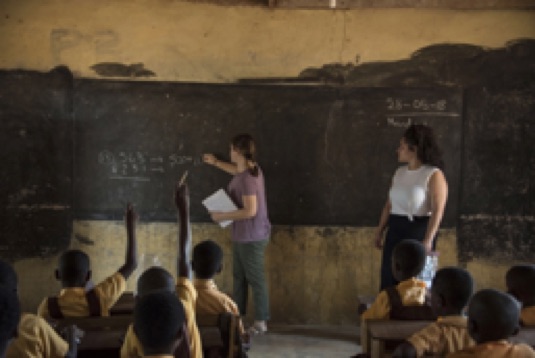
Another early start to the day and another breakfast later, we were on our way to the KNUST Counseling Center. Our aim was to inquire further into another of the four fields our groups are interested in, today’s visit being geared towards mental health in Ghana (and more specifically, the mental health of university students at KNUST). Our plan for the afternoon was to return to the Kokoben Academy for our final set of lessons for the students there.
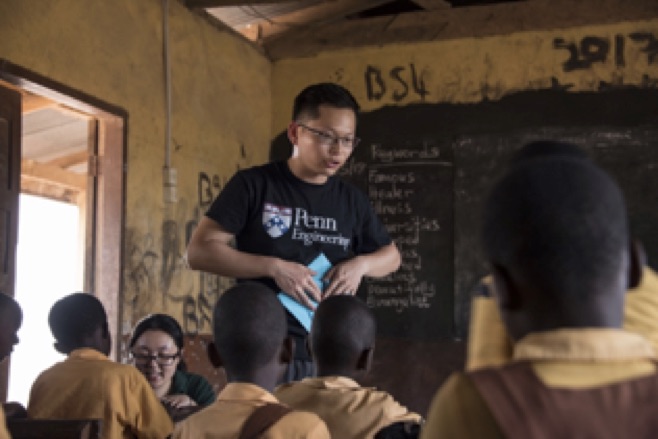
(Photo credit: Eliza Culp)
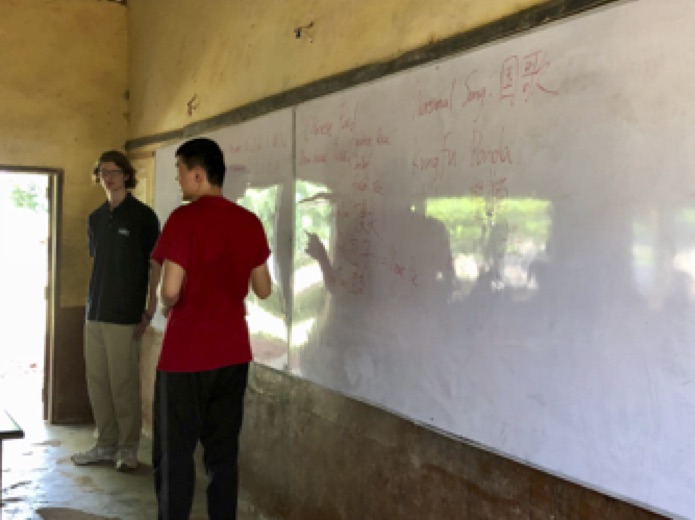
Upon arriving at KNUST however, we hit an unexpected roadblock (figuratively, that is). There was an unforeseen situation (the details of which remain undisclosed) that resulted in the unavailability of our contact in the facility. Luckily, we are no strangers to scheduling changes. We were able to call an audible, and simply ended up switching the order of our activities for the day – we drove instead first to Kokoben. Once again, the kids were eager to learn anything we would teach, but they seemed most interested in American culture. They inquired about our holidays, demographics, geography, food, and even our government. We ourselves were able to learn from them as well – both introspectively at our own culture as one of immigrants, but also simpler lessons, like the first ten numbers in Twi! Since today marked out final trip to the school, many of us bought candy beforehand to gift to the students. We had to exercise caution however, Ghanaian children are almost as voracious as their American counterparts and will not hesitate to swarm any candy-giving figure in proximity (no matter how tall you are, I found). Though fun, our trip was marked by melancholy; we had to say goodbye to the very real connections that we had formed in just a few short days. The service aspect of APOC will not end though, as we will be teaching at another school in the coming days.
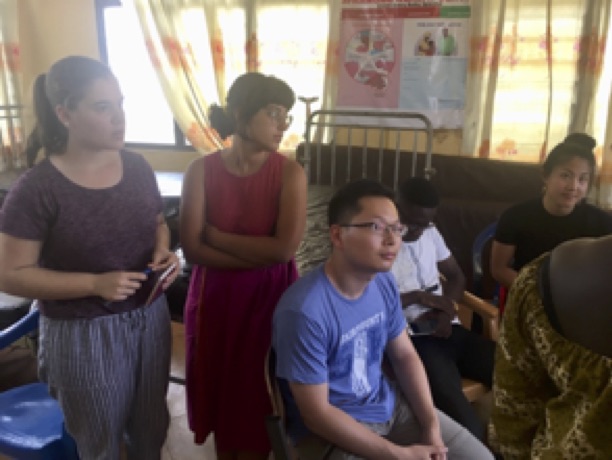
After skipping lunch due to its lateness and our crunch for time, we returned to the University Counseling Center to discuss the state of mental health among the students there. They have low funding and just 10 staff members, and they see 900 new cases each year. We learned about what the Center does, which includes therapy, outreach, and training programs. Since poverty and hunger are unfortunately not rare problems among students at KNUST, the Center will also provide basic food items to students during exam times, and provide free health screenings of all kinds.

In speaking with a faculty member there, we uncovered some rather stark cultural differences that surround the issue of mental illness in this country. Firstly, there are no explicit diagnoses made at the Counseling Center, at least not as we would think of them. Instead, patients come in and simply speak with counselors there. The counselor will listen and perhaps will be able to diagnose something, be it GAD, MDD, or another condition. There is a disconnect though – because of Ghanaian society’s attitude towards mental illness, counselors are unlikely to even tell their patients of their condition, for fear that they will not return to counseling. As a result, emphasis is usually placed on what are perceived to be the causes of these conditions – the most commonly cited are relationship and family issues, financial issues, and academic stress (oftentimes, combinations will manifest). Counselors focus on these stressors with patients, rather than the disorders themselves. This stigmatization of mental illness is widespread, structural, and systemic, and will be a real challenge for our mental health group moving forward.



 The mental health lecture, given by Dr. Emma Adjaottor, was impressive and surprising. We are so lucky that we met one of the psychiatric physicians among a hundred across the country. The doctor frankly introduced mental health development in Ghana. Though they have lagged behind, they have made a lot of progress, with the number of psychiatrists in Ghana recently increasing from single digits to the double digits. Dr. Adjattor emphasized that the epidemiology of mental health in Ghana is nearly identical to the rest of the world, particularly in terms of incidence and prevalence, even though it is severely under-reported. The doctor explained that, although the epidemiology is the same, the terms used to describe these issues are often different, relying on more local ideas, such as spirits and witchcraft.